Sedation Dentistry
If you have been delaying dental care because of fear or embarrassment, Dental TLC has a solution for you. Sedation dentistry!


Thanksgiving is almost here, reminding us to reflect on the things that matter most in life. At Dental TLC, we have many things to be thankful for, and I cannot think of a better time to list just a few of the things for which we are truly grateful. First and foremost, we are thankful for our patients. The entire Dental TLC team is grateful for the ability to make a positive impact in the lives of so many people. We’re thankful for our hardworking teammates who show dedication and compassion day in and day out. At Dental TLC, we call ourselves “The Tribe,” the bond that holds us all together is our love for each other and our patients. Their incredible and talented spirits fuel the fun environment that Dental TLC is known for. I hope this time of year also has you reflecting on all of the gifts in your life. From all of us at Dental TLC, THANK YOU and we hope that you have a wonderful Thanksgiving with family and friends!
Did you know that if you need a periodontal tooth cleaning that having a regular cleaning could actually be a disservice to the health of your teeth and gums? Yes that’s right! Many patients have questions about the difference in teeth cleaning treatments and today we are here to discuss the differences in these types of cleanings.
There are 3 types of cleanings, depending on how healthy your gums are. The term gum disease—or periodontal disease—describes bacterial growth that gradually destroy the tissue surrounding and supporting the teeth. X-rays give a clear view of any bone loss and tartar under the gum line.
“Periodontal” means “around the tooth” and hygiene probing measures the seal around the neck of each tooth. When you hear the hygienist calling out numbers during gum measurements, low numbers are the best. If the numbers are under 4, you will need a regular cleaning. If the numbers are 4 or above, then a deep cleaning may be required.
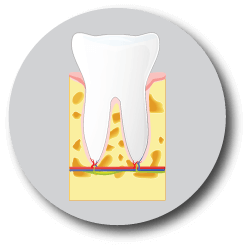
Gums are healthy. The regular cleaning removes tartar, stain and plaque from the enamel above the gum line.
Healthy gums appear pink, they do not bleed and they hug each tooth tightly. Shallow pocket depths are measured when probed. Normal is between 1 millimeter to 3 millimeters. No tartar or bone loss is detected on the X-rays and gums do not bleed!
Routine dental cleanings are recommended twice a year to keep your gums and teeth in a healthy condition. Gum disease is fast progressing and just because your gums are healthy doesn’t mean you should take them for granted.
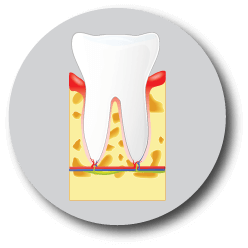
If bleeding and inflammation are present, your gums have the early signs of periodontal disease. A gingivitis cleaning removes tartar, plaque and stain and deep tartar incrusted deep below the gum line. This takes more time than a regular cleaning.
Diseased gums easily bleed when probed because of infection and inflammation. They appear red and puffy and their pocket measurements are deeper. Pockets that measure 3 millimeters to 5 millimeters indicate signs of disease.
X-rays detect deep tartar under the gum line at the neck of the tooth, but the bone crests are still intact. Gums can return to a healthy state with frequent regular cleanings and consistent home care.
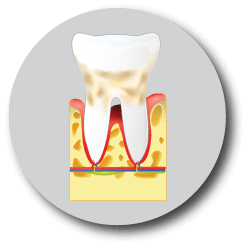
Here your gums are forever in a diseased state, but still manageable. This cleaning removes deep tartar incrusted on exposed roots, as well as infected and inflamed bone and gum tissue. Anesthetics are used for comfort. Sensitivity occurs because exposed root is porous and no longer insulated by the dome of enamel. Diseased bone bleeds easily, pus is visible and root surfaces are exposed because of the receding gum and bone tissue. X-rays show bone loss advancing and deep tartar encrusted on the exposed roots.
Routine visits to the dentist may be recommended more often than twice per year. Dentist approved plaque-removal devices, such as special toothbrushes, toothpicks or water irrigation tools can improve your at home care. Prescribed anti-plaque, anti-tartar toothpastes and rinses can also help and maintain a healthy mouth.

Scaling: The removal of tartar and bacteria from teeth and beneath gums. This is usually done in a standard professional teeth cleaning.
Root planing: Smoothing the root surfaces to discourage further buildup of tartar and bacterial toxins.
Antibiotics: May include topical antibiotics like mouth rinses and gels, or oral antibiotics.
Flap surgery (pocket reduction surgery): Lifting back gum tissue, exposing the roots for more effective scaling and root planing. The underlying bone may be recontoured so that it will be easier to clean the area around the gums.
Soft tissue grafts: This reinforces soft tissue lost to gum recession. A small amount of tissue from the roof of the mouth is relocated to the gum line in order to reduce further gum loss, cover exposed roots and improve appearance.
Bone grafting: This is done when the bone around the tooth root has been destroyed and helps prevent tooth loss by holding the tooth in place. It also promotes bone regrowth.
Guided tissue regeneration: This promotes regrowth of bone through the use of a biocompatible fabric being placed between the bone and tooth. The material prevents unwanted tissue from growing so that the bone can grow back.
Enamel matrix derivative application: This procedure, another form of guided tissue regeneration, involves the application of gel to a diseased tooth root. The gel contains the same proteins that naturally exist in developing tooth enamel. Its application stimulates healthy bone and tissue growth.
Periodontal disease is something you have to monitor your whole life, kind of like your blood pressure. You can reverse gum disease in it’s early stages, but once the gum detaches, bone is lost and/or the root surface is exposed, you can only treat it to decrease further deterioration. Call Dental TLC at (404) 255-2273 today and schedule your next dental cleaning. It’s our priority to give you the appropriate cleaning to maintain healthy gums and teeth!

Watch Dr. Abbott break down the importance of dental x-rays!
Let me ask you a question. Would you mind if your dentist was blind?
Of course you would! I know it’s a silly question but it’s actually not that far-fetched. You see, a dentist’s eyes can only see about a third of your tooth. Most dental problems are hidden in the blind spots between your teeth or underneath the gums where bone loss occurs.
X-rays are a valuable snap-shot in time of your ever-changing dental health. Your dentist can look back in your X-ray history and compare for change. X-rays are essential for diagnosing your present state of health or disease and they are also the standard of care!
People’s safety concerns about X-rays are subjective and are typically about radiation exposure. Check out our video to learn some interesting facts about X-ray radiation exposure or visit American Nuclear Society.
Dental X-rays are the lowest priced services on our dental care menu, yet they offer you the highest value that being early-detection, and prevention so problems don’t get worse.
X-rays are the best dollar you will ever spend at Dental TLC! An average filling will cost you a couple of hundred-dollars. If that small cavity grows into a root canal and crown, then you are looking at a-couple-thousands of dollars! Help us help you SAVE MONEY!
Please understand, we cannot provide you with our best without strapping on this vest!
Here are some hard facts from the American Nuclear Society that better communicate how safe X-rays are.
For example, a round-trip flight from Atlanta to LA expose passengers and crew to more radiation than an average set of dental X-rays.
“And Airline crews fly day in and day out every single day, 365 days a year”.
Here’s another interesting fact.
International Safety Standards allow nuclear facility workers radiation exposure of up to 5,000 millirems per year. That’s equivalent to 10,000 dental X-rays.
It’s fair to say you won’t ever be getting 10 thousand dental X-rays in a lifetime
So it’s safe to say, you’re safe.
You can find out more from the American Nuclear Society and view the Radiation Dose Chart by going to ans.org.
Dental X-rays are the lowest priced services on our dental care menu, yet they offer you the highest value that being early-detection, and prevention so problems don’t get worse.
X-rays are the best dollar you will ever spend at Dental TLC!
An average filling will cost you a couple of hundred-dollars. If that small cavity grows into a root canal and crown, then you are looking at a-couple-thousands of dollars! Help us help you SAVE MONEY.
Please understand, we cannot provide you with our best without strapping on this vest!
Simply stated Dental X-rays are the best dollar you will ever spend at a dental office.
Dental X-rays are both safe for our patients and safe for Dental TLC. Our staff is fully committed to clear communication with our patients. To set clear expectations and the standard of care of what a dental visit entails and what your responsibilities as a patient are.